
Nocona Belt Buckle Won’t Stay Closed? Here’s the Fix
A belt buckle that won’t stay closed turns a beautiful leather piece into a daily frustration. Whether your Nocona buckle pops open mid-day or refuses to latch at all, the problem usually traces back to one of three wear points: a bent prong, a stretched keeper loop, or metal fatigue in the frame itself.
We’ve seen every version of this issue across our classic western buckles, and the good news is that most fixes take less than five minutes with tools you already own. This guide walks you through diagnosing which part failed and the exact steps to restore a secure closure without replacing the entire buckle.

Why Western Buckles Lose Their Grip Over Time
Metal buckles flex thousands of times over years of wear, and that repetitive stress concentrates at three points. The prong bends slightly each time you thread it through a belt hole, the keeper loop stretches as it holds tension against your waist, and the frame itself can warp if the belt gets caught on something.
Leather belts also shrink and swell with humidity changes, which means the buckle tolerances that worked perfectly when new can become too loose after a year of seasonal cycles. A buckle that closes fine in winter might pop open in summer because the leather has thinned by a millimeter.
The heavier the buckle and the tighter you wear your belt, the faster these wear points accumulate stress. A three-inch trophy buckle with a solid brass frame will show prong bend long before a lightweight daily-wear piece does.
How to Diagnose Which Part Is Failing
Check the Prong First
Unbuckle your belt and hold the buckle at eye level with the prong pointing toward you. The tip should sit perfectly centered in the frame opening, not angled left, right, or downward. If it lists to one side or droops below the keeper bar, it’s bent.
Press the prong gently with your thumb — it should spring back with firm resistance. A prong that moves easily or stays compressed has lost its temper and won’t hold the belt in place.
Inspect the Keeper Loop
The keeper is the small metal loop or bar behind the prong that the belt tail threads through after buckling. Slide a credit card between the keeper and the buckle back plate — if it passes through with no resistance, the keeper has stretched and can’t grip the belt anymore.
A properly tensioned keeper should pinch the belt tail snugly enough that you feel slight friction when pulling the tail through. If the belt slides freely, the keeper has opened up and needs adjustment.
Fixing a Bent Prong Without Damaging the Buckle
Remove the buckle from the belt by sliding the leather out of the frame bars. Lay the buckle face-down on a folded towel to protect any decorative engraving or inlay work.
Use needle-nose pliers to grip the prong at its base where it attaches to the rotating bar. Apply steady upward pressure to straighten a drooping prong or lateral pressure to center a sideways bend — do this in one slow motion rather than multiple small adjustments, which work-hardens the metal and makes it brittle.
If the prong won’t hold its shape after bending, it’s lost its spring temper and the buckle needs a replacement prong assembly. Most western buckles use a standard 1.5-inch frame width, so replacement bars are stocked by leather suppliers and install with two small screws or Chicago bolts.
Testing the Repair
Reattach the belt and buckle it at your normal wear hole. The prong should snap into the hole with a distinct click and stay firmly in place when you tug the belt tail. If it still feels loose, the problem is likely the keeper loop rather than the prong itself.
Tightening a Stretched Keeper Loop
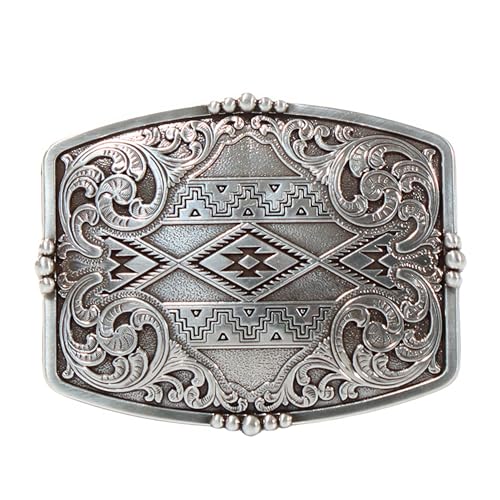
The keeper loop sits on the back of the buckle and wraps around a metal bar or post. Over time, the loop’s ends spread apart and lose their grip on the belt.
Use flat-nose pliers to squeeze the keeper loop closed — grip the loop at its midpoint and apply even pressure until the gap between the loop and the back plate shrinks to about 1-2 millimeters. Don’t over-tighten it or the belt tail won’t slide through at all.
Some vintage Nocona buckles use a riveted keeper bar instead of a loop. If the bar itself has bent away from the back plate, you’ll need to tap it back into position with a small hammer and punch, working slowly to avoid cracking the surrounding metal.
If the keeper is a welded piece and the weld has broken, the buckle needs professional repair or replacement — attempting to re-weld decorative buckles usually damages the finish beyond repair.

When the Frame Itself Has Warped
A buckle frame can twist or bow if the belt gets yanked hard while buckled, such as when a seat belt catches the buckle edge during a car exit. Hold the buckle flat against a table and press down on all four corners — if any corner lifts off the surface, the frame has warped.
Minor frame bends (under 2-3 millimeters) can be corrected by placing the buckle face-down on a hardwood block and tapping the high corners with a rubber mallet. Work in quarter-turns around the frame to avoid over-correcting in one direction.
Severe warps or cracks in the frame metal mean the buckle is done. The same construction methods that make ostrich and calf hair belts durable don’t apply to buckle frames, which rely on precise geometry rather than material thickness to function.
If you’re between belt sizes and the buckle won’t close even after repair, the issue might be fit rather than buckle failure — a belt that’s one hole too tight will force the buckle into a stressed position every time you wear it.
Keep Your Buckle Working for Years
A belt buckle that won’t close is almost always fixable with basic hand tools and ten minutes of careful work. The key is diagnosing which part has failed — prong, keeper, or frame — before you start bending metal.
Most buckle failures happen gradually, so checking the prong alignment and keeper tension every few months lets you catch problems before they turn into daily annoyances. A buckle that gets preventive adjustment once a year will outlast one that’s ignored until it fails completely.
If your buckle has cracked welds, a snapped prong, or frame damage beyond simple straightening, replacement is the better choice than forcing a compromised piece back into service. A secure closure is worth more than sentimental attachment to a buckle that can’t hold your belt in place anymore.
Common Questions About Buckle Closure Problems
Not reliably. A bent prong or stretched keeper needs pliers to reshape the metal with enough force to hold its new position. Finger pressure alone won’t move hardened steel or brass far enough to restore proper tension.
In an emergency, you can sometimes wedge a folded piece of cardstock behind the keeper to add friction, but this is a temporary workaround that will fail within a day or two.
Sitting increases the angle between your belt and buckle by 15-20 degrees, which shifts load from the prong onto the keeper loop. If the keeper has stretched even slightly, that angle change is enough to let the belt tail slip free.
The fix is tightening the keeper as described above. Some people also move to a smaller belt hole when sitting, which reduces the angle stress, but that’s treating the symptom rather than the cause.
A well-made buckle worn daily should hold its closure tension for 3-5 years before the prong or keeper needs adjustment. Trophy buckles or dress buckles worn occasionally can go a decade or more.
The biggest wear accelerator is over-tightening your belt, which flexes the prong past its elastic limit every time you buckle up. Wearing your belt one hole looser than you think you need extends buckle life significantly.
One careful straightening won’t hurt the metal, but repeated bending creates work-hardening and micro-cracks that eventually cause the prong to snap off at the base. If you’re re-bending the same prong every few months, replace the prong bar instead of continuing to reshape it.
Brass prongs are softer than steel and tolerate re-bending better, but they also lose tension faster under daily use.
Yes — a buckle that pops open repeatedly will saw back and forth across the belt hole, elongating it into an oval and creating a weak point in the leather. Once a hole stretches to twice its original diameter, that section of the belt is essentially ruined.
Fixing the buckle as soon as you notice closure problems saves the belt from this kind of secondary damage.
No — oil attracts dust and grit that will gum up the prong hinge and keeper loop. Western buckles are designed to operate dry, and the small amount of friction in a working buckle is actually what keeps it securely closed.
If the prong hinge feels stiff or squeaky, the issue is rust or metal burrs rather than lack of lubrication, and the fix is disassembly and light sanding rather than oil.