
Nocona Ostrich vs Calf Hair Belts: Which Exotic Leather Stands Up to Daily Wear?
An exotic leather belt delivers texture and character no plain cowhide can match, but ostrich and calf hair behave very differently under daily wear. Ostrich quill follicles create a raised, bumpy surface that flexes without cracking, while calf hair offers soft, directional fur that must be protected from moisture and abrasion.
Nocona produces both styles in the same full-grain construction, so the difference comes down to how each leather handles the stress points every belt endures: the buckle hole, the tail fold, and the keeper loop. We’ll walk through texture, flexibility, aging patterns, and care requirements so you can choose the exotic that fits your wardrobe and maintenance routine.
Ostrich Quill Texture and How It Ages
Ostrich leather is harvested from the bird’s body, and each quill follicle leaves a raised bump across the hide. Those bumps give the belt its signature look, but they also create natural flex points that prevent the cracking you see in stiffer exotics like alligator.
The quill pattern is consistent across the strap, so even after years of buckling and unbuckling the same holes, the leather stretches rather than tears. Ostrich darkens slightly with hand oils and sunlight, developing a richer tone over time without losing the quill definition. The surface can be wiped clean with a damp cloth, and a quarterly coat of exotic leather conditioner keeps the follicles from drying out.
One quirk: ostrich is surprisingly lightweight for how thick it feels, so the belt sits flatter on the waist than a comparable full-grain cowhide. That low profile works well under a tucked shirt but means the buckle carries more of the belt’s visual weight.
Calf Hair Construction and Vulnerability to Wear
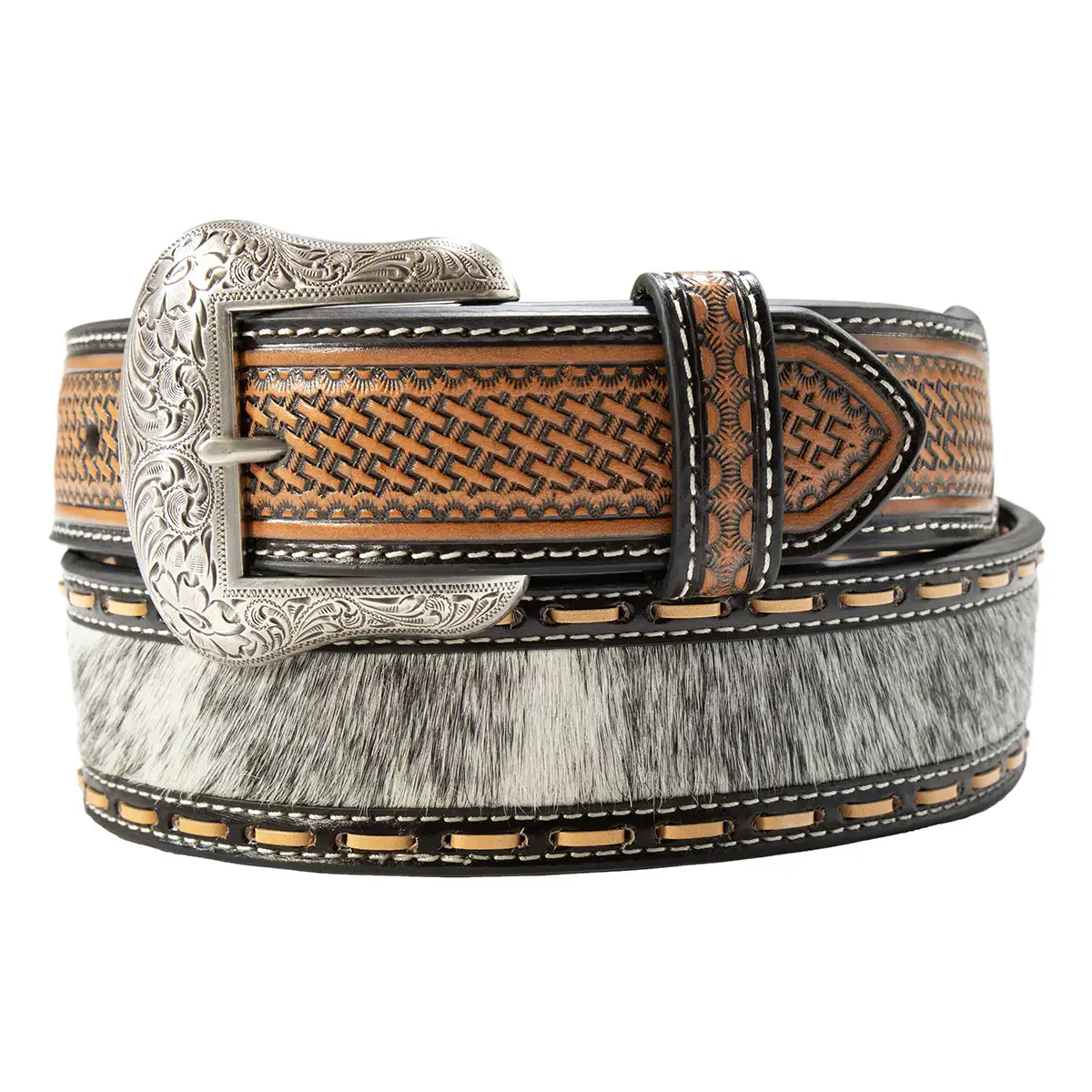
Calf hair belts are built on a cowhide base with the hair left intact, creating a soft, directional texture you can stroke in one direction. The hair lies flat when brushed toward the tail and stands slightly when brushed back toward the buckle, which gives the belt a two-tone appearance depending on angle and light.
That hair layer is also the belt’s weak point. Moisture from rain or sweat can mat the fur, and repeated friction against a belt loop or keeper will thin the hair over time, especially at the buckle hole and the first keeper. Nocona finishes calf hair belts with a light sealant to slow that wear, but the fur won’t recover once it’s worn down to the hide beneath.
Calf hair picks up lint and dust more readily than smooth leather, so a soft brush after each wear keeps the texture clean without pulling fibers loose. A sizing pass with Nocona’s fit chart ensures the buckle sits at the center hole, reducing the number of times you rebuckle through fresh hair as your waistline shifts.
Flexibility and Buckle Stress Comparison
Both leathers start stiff out of the box, but ostrich breaks in faster because the quill follicles compress and expand with each buckle cycle. After two weeks of daily wear, an ostrich belt conforms to your waist shape and buckles without resistance.
Calf hair remains stiffer longer because the hide base must soften before the belt bends easily, and the fur layer adds thickness that resists tight folds. That stiffness protects the hair from crushing at the keeper, but it also means the belt takes a month or more to stop feeling rigid when you first buckle it each morning.
Buckle Hole Integrity
Ostrich leather grips a buckle prong firmly without tearing, even after hundreds of cycles through the same hole. The quill bumps distribute stress across a wider area, so the hole edges stay intact.
Calf hair splits more easily because the fur layer doesn’t reinforce the hide beneath it. A prong punched through wet or matted hair can pull fibers loose, enlarging the hole over time. Rotating between two adjacent holes every few months spreads that wear across more of the strap.

Care Routines That Extend Each Exotic’s Life
Ostrich needs minimal upkeep: wipe the surface with a slightly damp microfiber cloth after exposure to dust or spills, then apply a thin coat of exotic leather conditioner every three months. The conditioner sinks into the quill follicles and prevents the leather from drying out at stress points.
Calf hair requires more frequent attention. Brush the fur with a soft-bristle brush after each wear to lift dust and restore the nap, and avoid wearing the belt in rain or snow. Water flattens the hair and leaves water spots on the hide once it dries. Store calf hair belts flat or rolled loosely, never folded, because a sharp crease will permanently bend the fur in the wrong direction.
Stain and Scratch Recovery
Ostrich scratches are almost invisible because the quill texture masks shallow scuffs, and most marks blend into the bumpy surface. Deeper gouges can be rubbed with a fingertip to blend the oils back into the follicle, though the quill pattern won’t fully recover if the leather is cut.
Calf hair stains are permanent. Ink, oil, or dye will soak into the fur and spread along the hair shafts, and no cleaner can lift the color without damaging the surrounding texture. A small spill on ostrich can be wiped away immediately; the same spill on calf hair ends that belt’s lifespan.
Matching Exotic Leather to Your Wear Habits
Ostrich delivers low-maintenance texture that ages gracefully and handles daily buckling without tearing at the holes, making it the better choice for a belt you’ll wear year-round in varying conditions. Calf hair offers a softer, more distinctive look but demands careful handling and won’t recover from moisture or abrasion once the fur is damaged.
Both leathers elevate a simple belt into a statement piece, but your decision hinges on whether you value durability or texture. If you need an exotic that survives sweat, rain, and repetitive wear, ostrich outperforms calf hair in every stress test. If you’re willing to rotate belts and keep calf hair away from moisture, the fur’s unique appearance justifies the extra care.
Questions About Ostrich and Calf Hair Belt Performance
Ostrich stretches slightly at the buckle holes after extended wear, usually one-quarter to one-half inch over a year, because the quill follicles compress under tension. Calf hair stretches less because the hide base is thicker and the fur layer adds stiffness, but both will eventually soften enough to buckle one hole tighter than when new.
Humidity alone won’t harm the hair, but sweat and moisture trapped under a tucked shirt will mat the fur and leave salt stains on the hide. If you wear the belt in high humidity, brush the hair after each wear and store it in a dry space overnight to let any trapped moisture evaporate before the next use.
Ostrich handles repetitive buckling better because the quill texture distributes prong stress across a wider hole edge, preventing the tearing you see in smoother leathers. Calf hair splits more easily at the buckle hole because the fur doesn’t reinforce the hide beneath it, so rotating between adjacent holes every few months extends the belt’s life.
The quill follicles compress slightly at high-stress points like the buckle hole and keeper loop, but they won’t disappear completely. The bumps retain most of their height even after five years of daily wear, though the overall texture may soften and feel less pronounced than when the belt was new.
No. Ostrich conditioner is absorbed by the quill follicles and keeps the leather supple, but applying conditioner to calf hair will mat the fur and darken the hide unevenly. Calf hair only needs brushing and occasional spot cleaning with a damp cloth; the sealant Nocona applies during finishing protects the hide without additional conditioning.
Minimal shedding is normal in the first few weeks as loose fibers work free, but healthy calf hair shouldn’t shed heavily after the break-in period. Excessive shedding indicates the hide wasn’t properly tanned or the fur is rubbing too hard against a belt loop, and that wear won’t reverse once the hair thins to the base layer.